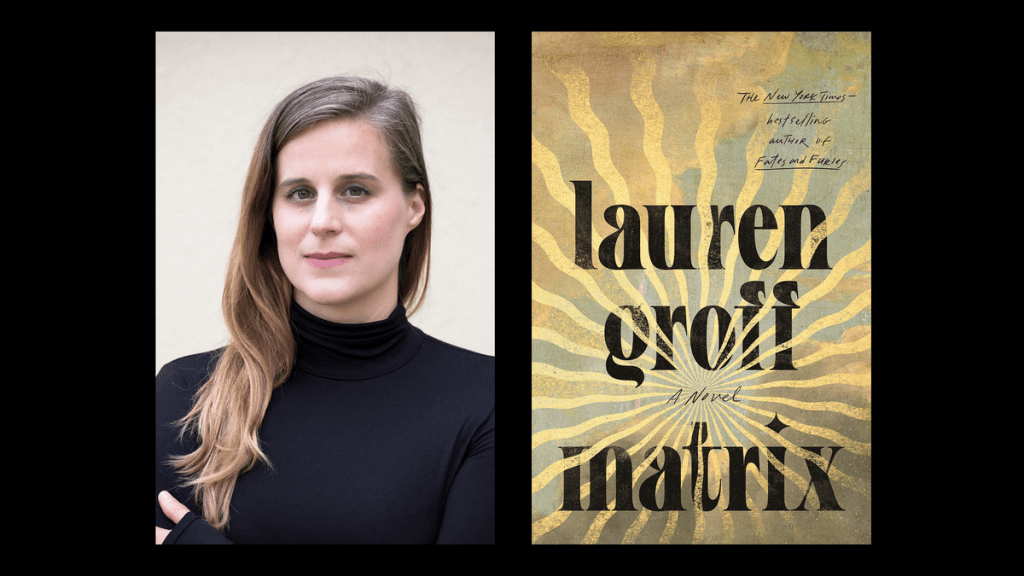
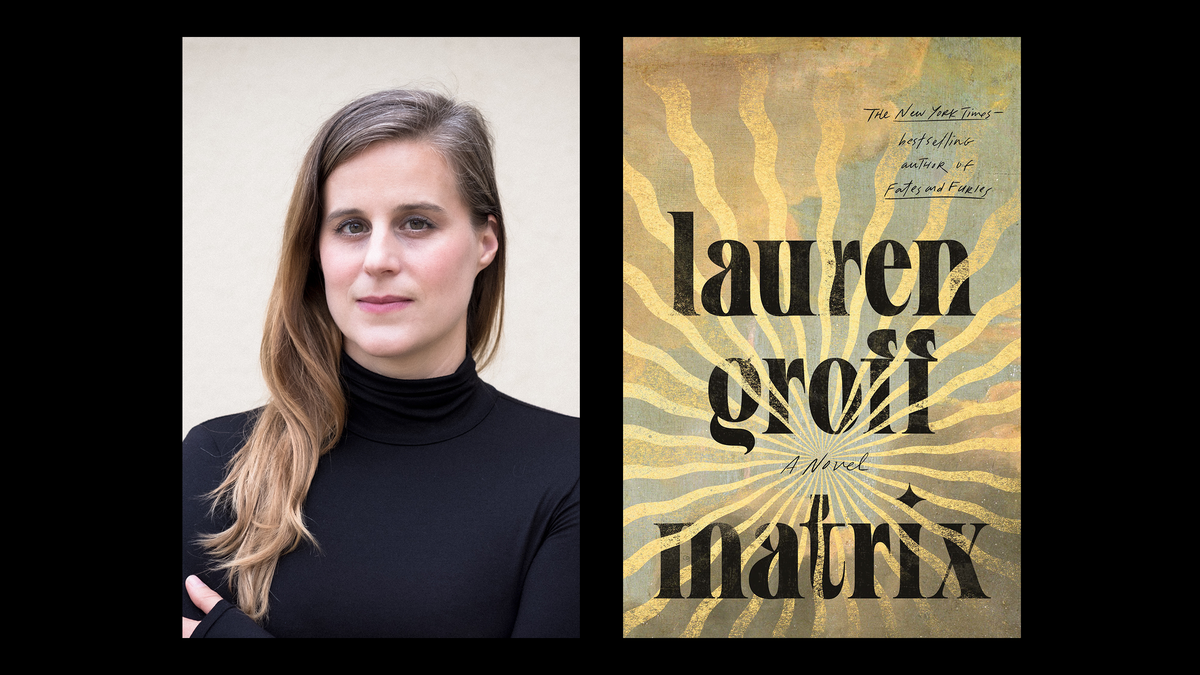
Lauren Groff is one of the best writers we have working today. Her 2015 novel, Fates and Furies, really blew me away with its intimate look at a modern marriage infused with elements of Greek tragedy. The novel catapulted Groff to the center of the literary world. The follow-up, a short story collection, Florida, garnered a ton of acclaim. The book won The Story Prize and was nominated for the National Book Award. In Florida you can see Groff start to really settle thematically into someone who is concerned with feminism, conservation, and the use of elements of religion and mysticism in her story telling. Her prose are ferocious. She is able to conjure images on a sentence-to-sentence basis that makes for a super satisfying read. The best analogy I can think of is watching a movie in 4k, HDR. Groff writes into existence worlds that are fully realized, teaming with wonderful details. To quote Katy Waldmen in her New Yorker review of Florida:
Groff has always been a sentence-level writer, and the sentences indigenous to “Florida” are gorgeously weird and limber. The lit windows of neighbors are “domestic aquariums.” An oak’s branches “are so heavy they grow toward the ground then touch and grow upward again; and thus, elbowing itself up,” the tree “brings to mind a woman at the kitchen table, knuckling her chin.” The author practices a kind of alchemical noticing that destabilizes reality and brings the outside world into alignment with characters’ inner lives. One mother “feels it nearing,” she writes, “the midnight of humanity. Their world is so full of beauty, the last terrible flash of beauty before the long darkness.” Hers is an artful hysteria; elsewhere, protagonists greet apocalypse with resignation or bravado. They are funnier than Lotto or Mathilde were, and a hair more human.
I picked up Groff’s fourth novel, Matrix, shortly after it came out in 2021. The book, naturally, was released to high praise from critics. It was shortlisted for a slew of literary prizes, and seems to have become many readers’ favorite from the author’s oeuvre. It’s a work of historical fiction, based loosely on the life of Marie de France who – in the novel – after being exiled from the court of Queen Eleanor of Aquitaine, is sent to live in a small abbey in England to live out the rest of her days. At first Marie thinks that she is being sent to her death, and is greatly depressed by this fate, but over time is able to use her intelligence and force of will to create a life for herself as a nun that would become the stuff of legend.
The book is set mostly in the 12th century, and is very loosely based on the real Marie de France who is known for having written short romances and fables in a time where few women were known for their writing. Not much is known about Marie’s life outside of her writings, and Groff uses the blank canvas to paint a life of religion, womanly love, sexuality, leadership and motherhood. In Marie, Gorff had found her muse.
I have to be honest. A book about nuns in the 12th century was a big hurdle for me to get over. After skimming a couple pages, Matrix sat in my backlog for years. Shame on me for doubting that Groff would do anything less than turn what, at first blush, may seem mundane into an epic saga filled with bloodsoaked battles, extensive world building, and an almost utopian society of kick-ass women who seem capable of almost anything. Marie goes from being a too-tall, gangly teenager who was desperate to experience the life of a “lady,” to a fearsome, brilliant woman of the faith who turns the humble abbey she is exiled to into a decadent tower of faith. Her abbey would become a beacon of hope in a world that the time was mostly shite. I mean go look it up, the 1100’s did not seem like an amazing time to be alive.
What I love about Matrix is that Groff is able to use Marie’s story to play around with ideas like feminism and women’s sexuality in an age in which women are barely given any space in historic texts. Here it’s men who are barely mentioned, and when they are it’s usually as a plot device that spells ill-will for the women in which the story is focused.
Groff argues that the nuns who inhabit Marie’s abbey are filled with wonders. While they absolutely are women of the faith, they never cease being humans. So often stories about nuns are filled with a sense of properness and shame. The characters are often stiff, and the tension within is almost always due to the puritanical nature of their lives. Groff is keen to show us the nuns’ interior lives and their very human needs – be they intellectual, sexual, or simply the need to love. There’s no judgement in Groff’s prose, and it frees up the characters to be more than stereotypes. One of my favorite characters, a welsh woman named Nest, is the abbeys de facto doctor, pharmacist, and practitioner of what she calls “expression of humors.” She relieves some of her fellow nuns of their sexual urges. So much of this book is about lesbian love, and how even in an abbey woman should be free from sexual guilt.
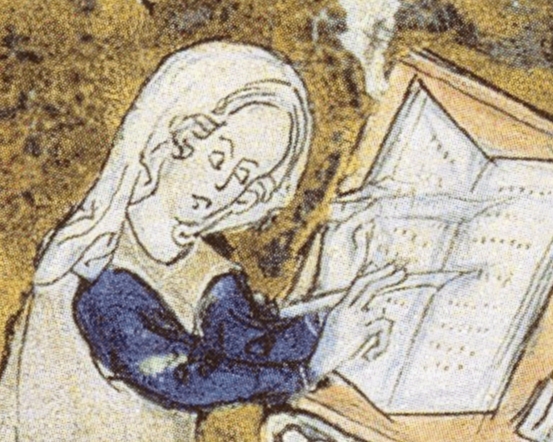
Marie, who we are introduced to as a scared, unsure teeneager, becomes a woman of great ambition. She has multiple visions of the Virgin Mary, which she interprets as a series of increasingly complicated projects that morphs her tiny abbey into a hub of industry and commerce. Marie’s first job in the abbey is record keeper, where after learning that people who rent land from the abbey have not been paying what they owe, hops on her horse and collects. She finds that her size, which she at one point considered a curse, is a useful tool for a woman of the faith that commands respect and deference. Marie wills her little abbey out of poverty, and after she is voted abbess, commits her life to growing the abbey. She grows the farm on the grounds, has her trainees learn English, French and Latin, in order to transcribe texts, a profitable enterprise for the abbey.
In time Marie’s abbey becomes both beloved and feared in her community, to the point where Queen Eleanor warns the abbess that so much success from a group of women would surely be frowned upon by powerful men. Marie calls upon the intelligence and ingenuity of her ever growing flock to create a great labyrinth around the community. And when a group of men do eventually try to infiltrate her holy grounds, the nuns are able to outwit their attackers, boobey-trapping their surroundings, and quickly disposing of the threat. Napoleon would be proud.
Marie also shows an impeccable gift for politics. As she uses the wealth generated by the abbey to take great care of the poor around her. It is said that even the rich amongst them are not able to afford such nice clothes as are provided to the impoverished by the nuns. The taxes and tithes that her community gives the Queen and her diocese insulates them from an ever increasing hostile world. By the time that Marie reaches the end of her life, the abbey is able to have fresh water from a local dam they have built year round, which contributes to a brewery and winery. The abbey, which was in a place of great disrepair when Marie arrived, stocked with only a few animals and not enough grain to last the winter, is now a self-sustaining center of agricultural, industrial, and cultural abundance.
It’s the ways in which Matrix blends elements of historical fiction and magical realism that makes the read so much damn fun. Groff keeps pushing at the limits of what we believe one person is capable of. Throughout the novel Maries subjects are quick to point out that perhaps their abbess is overreaching her boundaries. At one point Marie even starts conducting Mass, which at the time was heresy. The common people in towns surrounding the abbey consider Marie to be some combination of witch-queen, seer, and saint. All the while Groff seems to be saying, “why not?” Why shouldn’t Marie do everything in her power to improve the lives of her flock? What is the point of adhering to society’s rules and expectations when that society is, in itself, corrupt and destructive. Groff’s Marie de France is both awesome and terrifying to those around her because she is uncompromising in her womanhood. The brand of feminism she represents is as terrifying to our modern establishment as it would have been to hers. Even now we can’t help but look upon her deeds and tremble.
Editor’s Note: Groff has launched an IndieGoGo campaign to help launch a new independent book store in Gainesville, Florida. You can check out the details here.
 Justin Jacobs
Leave a comment